Day one
Morning: truffle hunt in the woods. A simple lunch built around truffle. Afternoon: Vino Nobile tasting in Montepulciano. Evening: dinner at the villa, with the fire lit.
 Podere Sionne
Experiences
In autumn the woods between the Val di Chiana, the Val d'Orcia and the Crete Senesi smell of truffle. For guests staying in Chiusi it is an experience within easy reach: a guided hunt with dogs, a simple dish at the table, a visit to a market. This guide, written by Podere Sionne (Chiusi Città), explains the seasons, how the hunt works, how to recognise a good truffle and how to plan a weekend.
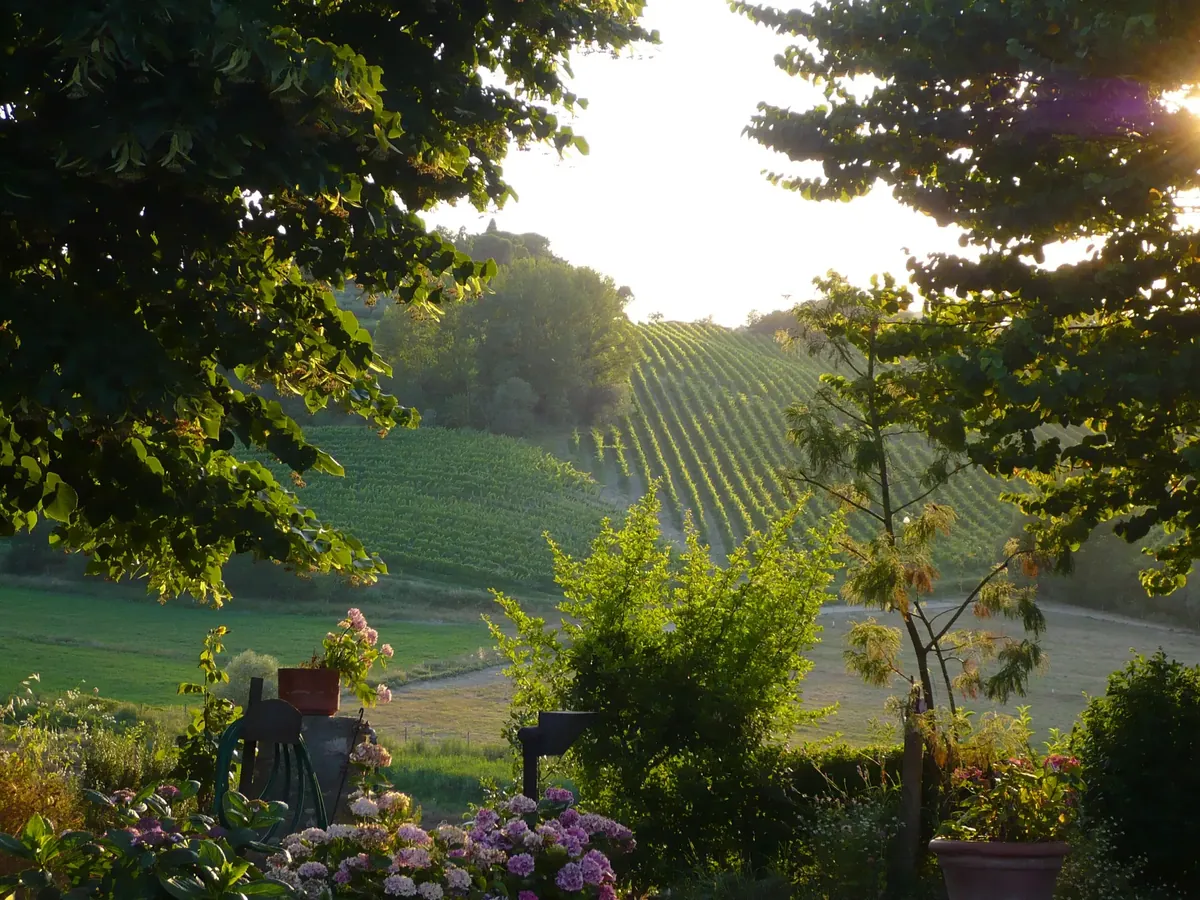
Several species of truffle are harvested in Tuscany, and each has its own period. This outline is indicative.
| Type | Indicative period | Characteristics |
|---|---|---|
| Prized white truffle (Tuber magnatum) | October–December | Intense aroma, eaten raw. The most sought-after and the rarest. |
| Prized black truffle (Tuber melanosporum) | December–mid-March | Strong aroma, stands up to gentle cooking. |
| Bianchetto or marzuolo (Tuber borchii) | January–April | Cheaper, with a very pronounced scent. |
| Scorzone or summer truffle (Tuber aestivum) | June–autumn | Delicate, with good value for money. |
Official harvest calendars are set by the Region and can change: check them before booking. The white truffle is rare and its price varies greatly from one year to the next.
The truffle grows underground, in symbiosis with the roots of oaks, poplars, willows and lime trees. You cannot see it: the dog finds it by smell.
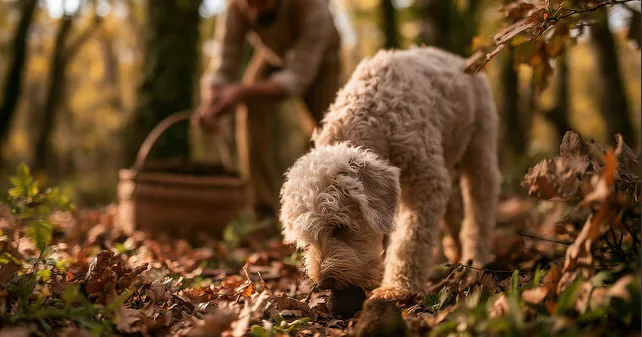
For a visitor, the simplest route is to rely on a licensed hunter and his or her dogs. A few things to know:
Podere Sionne arranges a truffle hunt on request in the woods of the area: details are on the home page.
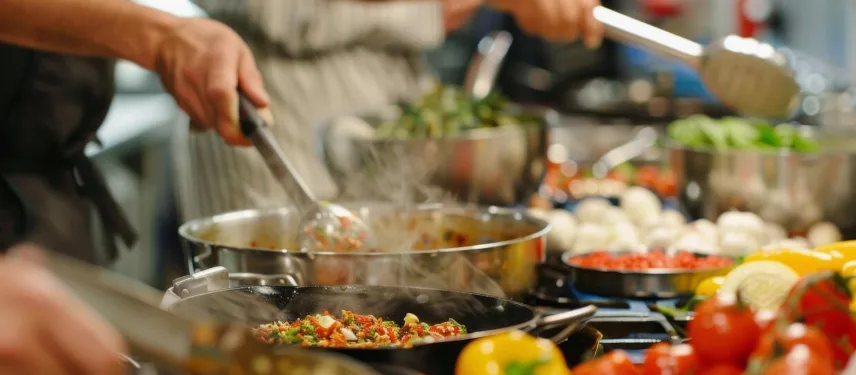
Truffle deserves few ingredients. The secret is not to mask its scent.
If you would like to learn to make fresh pasta to dress with truffle, Podere Sionne arranges a cooking class on request.
If you would also like to see the truffle world above ground, there is San Giovanni d'Asso, in the Crete Senesi, about an hour from Chiusi: it hosts the Truffle Museum and, as a rule, a white-truffle market fair on weekends in November. Dates change from year to year: check the official calendar.
In the shops of Montepulciano and Pienza you can also find truffle creams, oils and pastas, handy as souvenirs.
Morning: truffle hunt in the woods. A simple lunch built around truffle. Afternoon: Vino Nobile tasting in Montepulciano. Evening: dinner at the villa, with the fire lit.
Morning in San Giovanni d'Asso (museum and, in season, market fair), or in Pienza for pecorino. Lunch. A relaxed drive back through the Val d'Orcia.
Roughly October to December. The official calendar is set by the Region and may vary: check it before booking.
Not on your own: in Italy you need the regional licence card. Visitors can join a guided hunt with a licensed hunter and his or her dogs.
Yes, the summer truffle (scorzone), from June to roughly autumn. It is more delicate and less expensive than the prized white and black.
Simply: white raw in shavings over eggs, tagliolini with butter or crostini; black can also be gently warmed, in sauces or butter.
Wrapped in absorbent paper, in a closed container in the fridge, and eaten within a few days.
Yes, on request, in the woods of the area; cooking classes are also available. Write to us for dates and details.