What to See Near Chiusi: a Guide to Val di Chiana and Val d'Orcia
Chiusi sits where Tuscany meets Umbria. Within an hour's drive you will find two UNESCO sites, one of Italy's first DOCG wines, natural hot springs, a lake and three great art cities. Written by Podere Sionne (Chiusi Città), this guide lays out what to see, how far it is and how to plan your days.
Podere Sionne··8 min read
How far are the main destinations from Chiusi?
These are approximate driving times from the Chiusi area. Traffic, parking and stops can add time, so always allow a little extra.
Destination
By car
Why go
Chiusi Città
~10 min
Etruscan town, museum, tombs and underground labyrinth
Montepulciano
15–20 min
Vino Nobile, panoramic square, wine cellars
Chianciano Terme
~20 min
Thermal waters and spas
Sarteano and Cetona
~20 min
Stone villages, castles, nature
Pienza
25–35 min
Renaissance ideal town, pecorino, UNESCO
Lake Trasimeno
~30 min
Islands, lakeside villages, walks
Orvieto
30–40 min
Gothic cathedral, St Patrick's Well, underground city
Siena
45–60 min
Piazza del Campo and the Duomo
Florence
60–90 min
Uffizi, Duomo, Ponte Vecchio
Saturnia
~1 h 15
Open-air thermal waterfalls
Chiusi Città: the Etruscan town ten minutes away
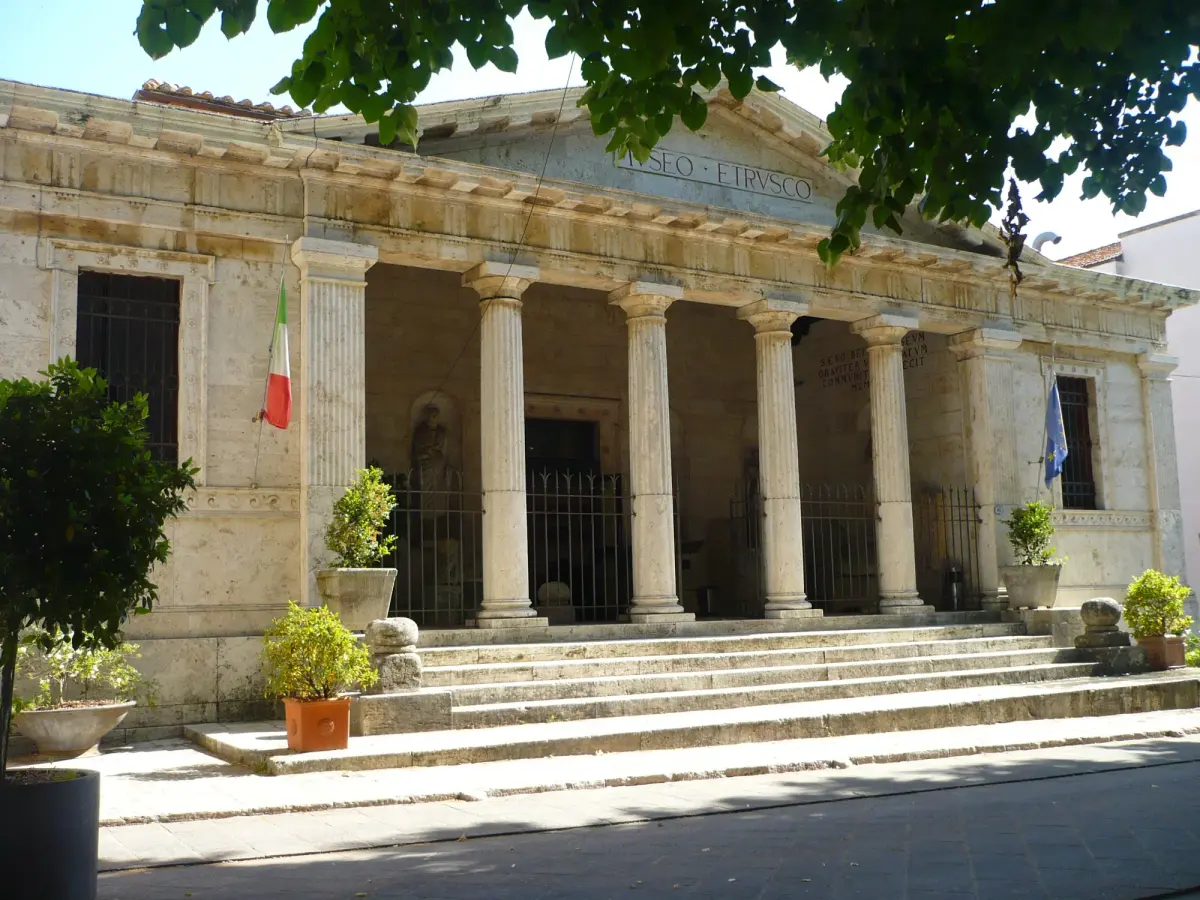
The National Archaeological Museum of Chiusi, in the old town.
Chiusi was one of the main Etruscan cities, the Clevsin of King Porsenna. Today its old town keeps that past almost in the open air.
National Archaeological Museum: urns, vases and grave goods tell the story of the local Etruscan civilisation.
Porsenna's Labyrinth: an underground route of tunnels and cisterns beneath the town, visited on a guided tour.
Etruscan tombs: nearby you can visit painted tombs such as the Tomb of the Monkey (usually by appointment).
Early Christian catacombs and the Cathedral of San Secondiano with its medieval bell tower.
A morning and a lunch in the centre are enough. Check opening times and booking rules before you set out: many sites are by appointment.
About 15–20 minutes from Chiusi, Montepulciano is a Renaissance hill town on a ridge above the Val di Chiana. It is home to Vino Nobile di Montepulciano DOCG, among the first Italian wines to receive DOCG status, in 1980.
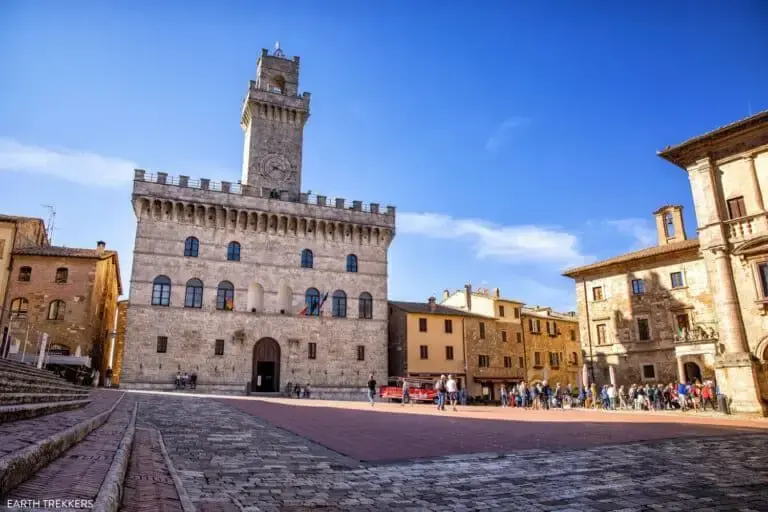
Piazza Grande and the Town Hall: from the tower you can see across the Val di Chiana, as far as Lake Trasimeno on clear days.
Cellars beneath the palaces: many wineries age their wine under the old town and offer tastings. Book in high season.
Church of San Biagio, a Renaissance masterpiece just outside the walls, ringed by cypresses.
A steep walk up the main street: wear comfortable shoes, the town is hilly.
Pienza and Val d'Orcia: postcard landscapes
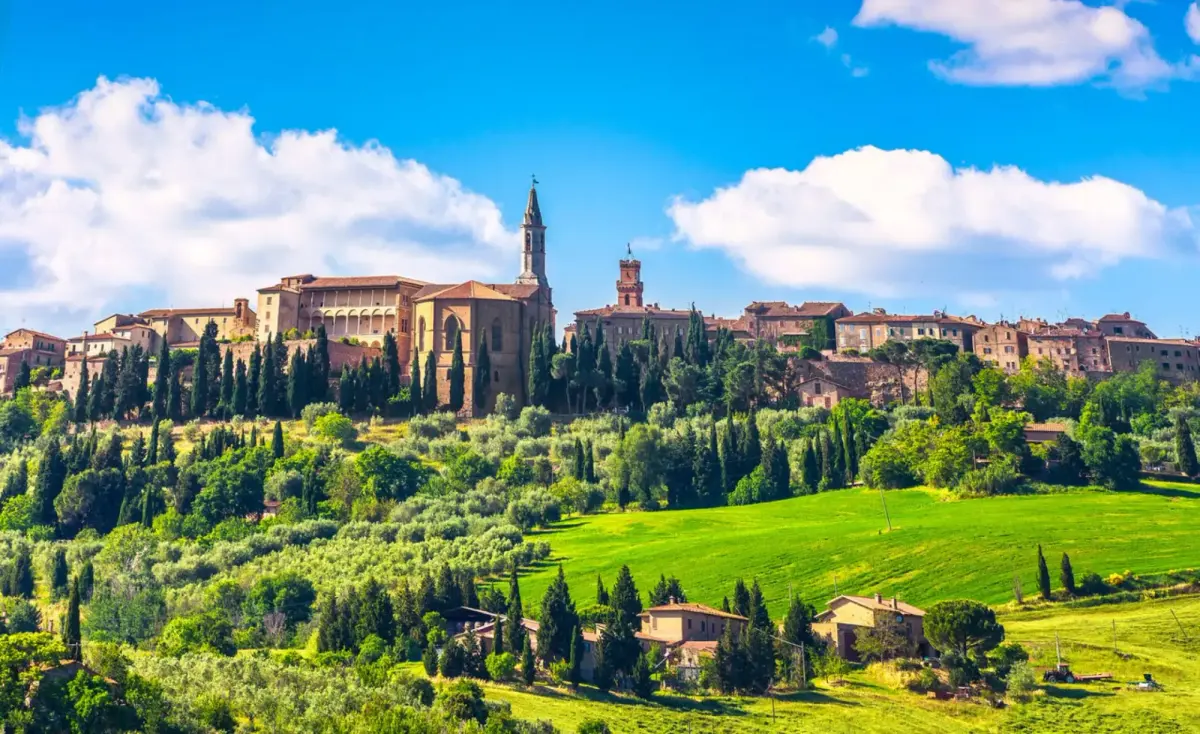
Pienza and the hills of the Val d'Orcia.
Twenty-five to thirty-five minutes from the villa you enter one of Italy's most recognisable landscapes. The historic centre of Pienza has been UNESCO-listed since 1996, and the Val d'Orcia since 2004.
Pienza was built in the 15th century as an "ideal city" by Pope Pius II, designed by Bernardo Rossellino. Palazzo Piccolomini, the cathedral and the square survive almost intact. This is the place to buy pecorino in every degree of ageing.
For a full day in the Val d'Orcia, combine Pienza with:
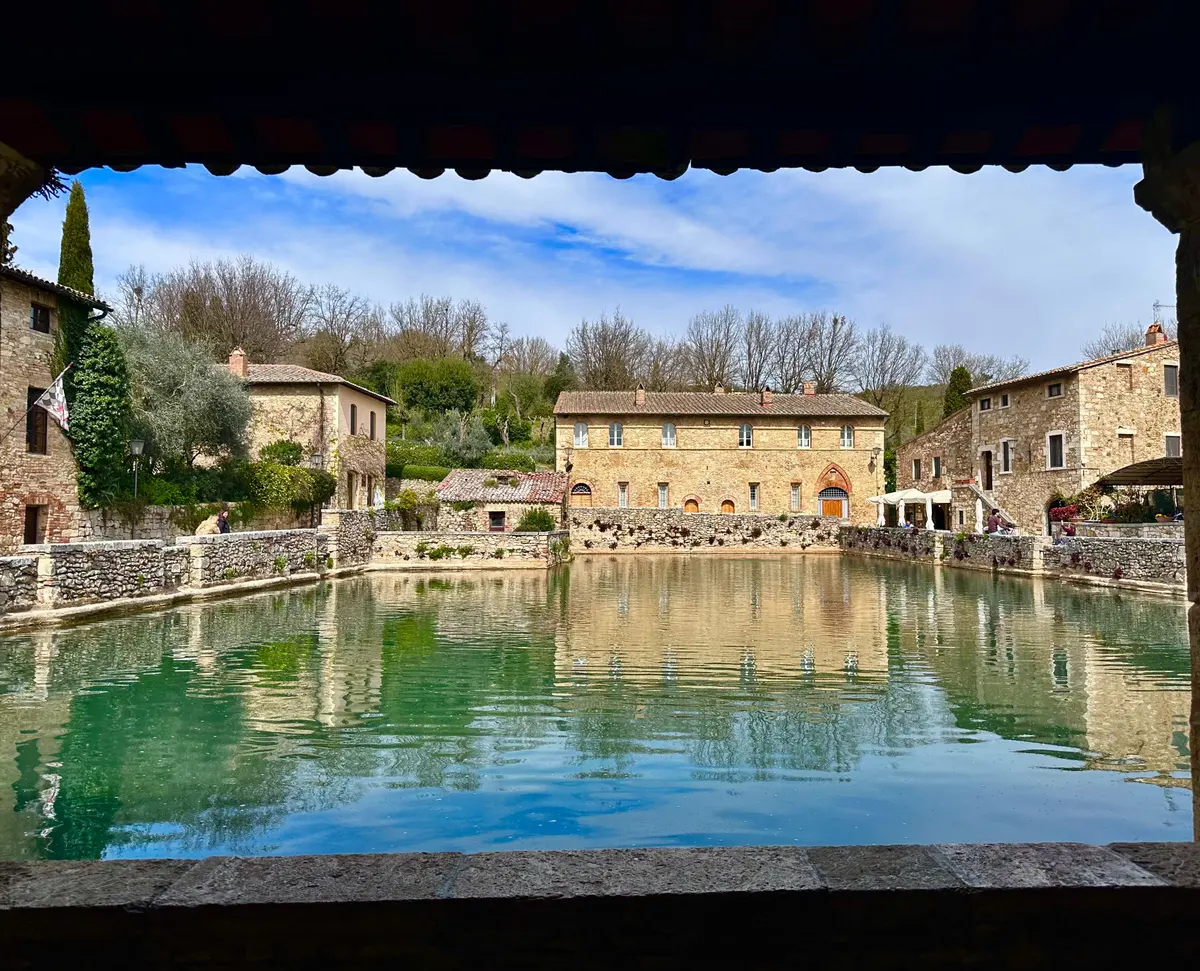
Bagno Vignoni: a village built around a thermal pool instead of a square.
San Quirico d'Orcia: the 16th-century Italian garden of the Horti Leonini.
Montalcino: the home of Brunello, for a tasting and views from the Fortress.
The cypress roads between San Quirico and Pienza, perfect for photographs at dawn and dusk.
Hot springs near Chiusi: where to take a warm bath
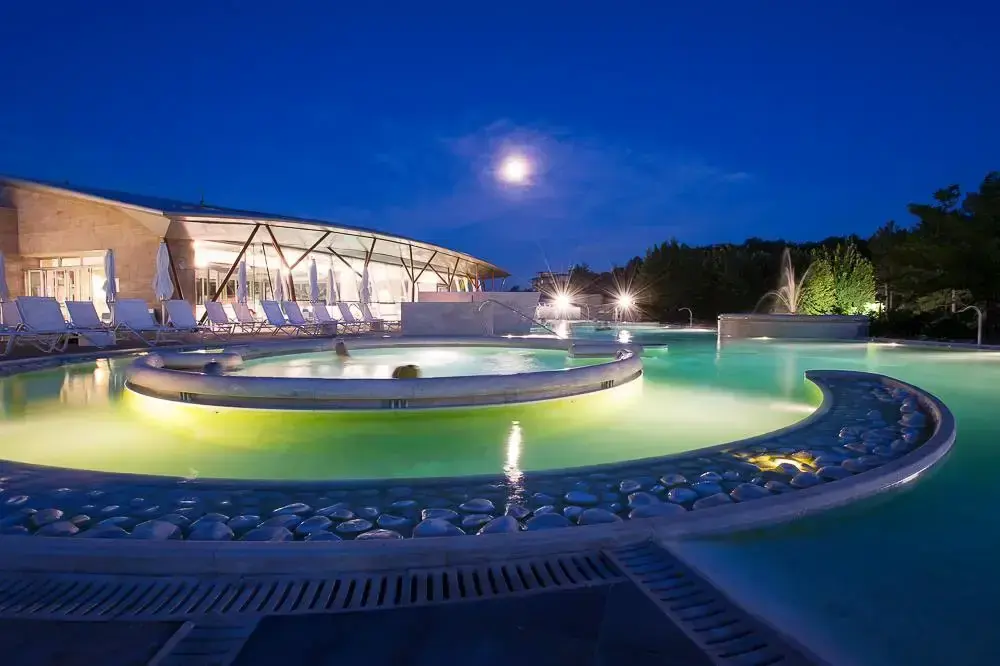
An open-air thermal pool, one of the area's wellness spots.
The ground beneath this part of Tuscany is rich in hot water. Your options, nearest first:
Chianciano Terme (about 20 minutes): a historic spa town with thermal establishments, parks and spas.
Sarteano: a village with a castle and thermal pools, just minutes away.
San Casciano dei Bagni (about 30 minutes): a spa village also known for the Etruscan-Roman sanctuary of the Bagno Grande.
Bagni San Filippo (about an hour): free-access natural pools and white limestone formations.
Bagno Vignoni (about an hour): a village with a thermal pool instead of a square; for a bath there are the spa establishments.
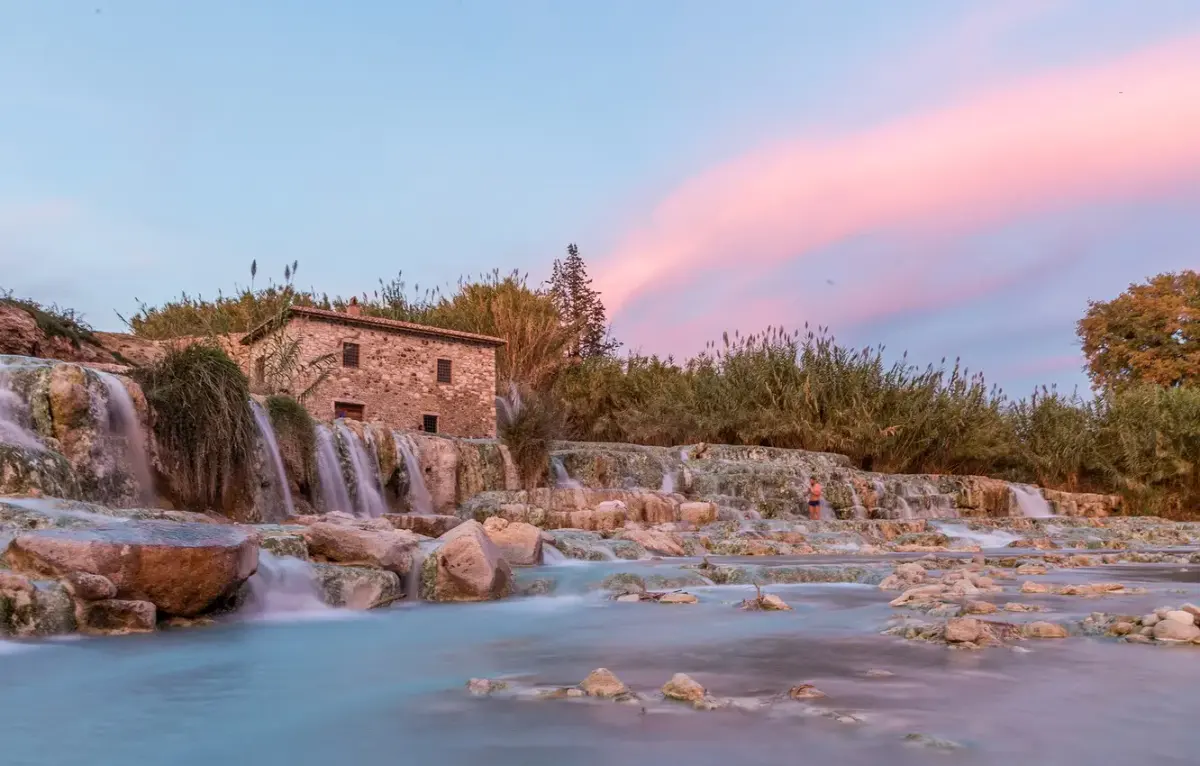
Saturnia (about 1 hour 15): the Mulino waterfalls, water at around 37°C, in the open air.
Hot springs are ideal in autumn, winter and spring. In high summer choose early morning or evening.
The thermal waterfalls of Saturnia, about an hour and a quarter from Chiusi.
Lake Trasimeno and Umbria: Orvieto, Perugia, Assisi
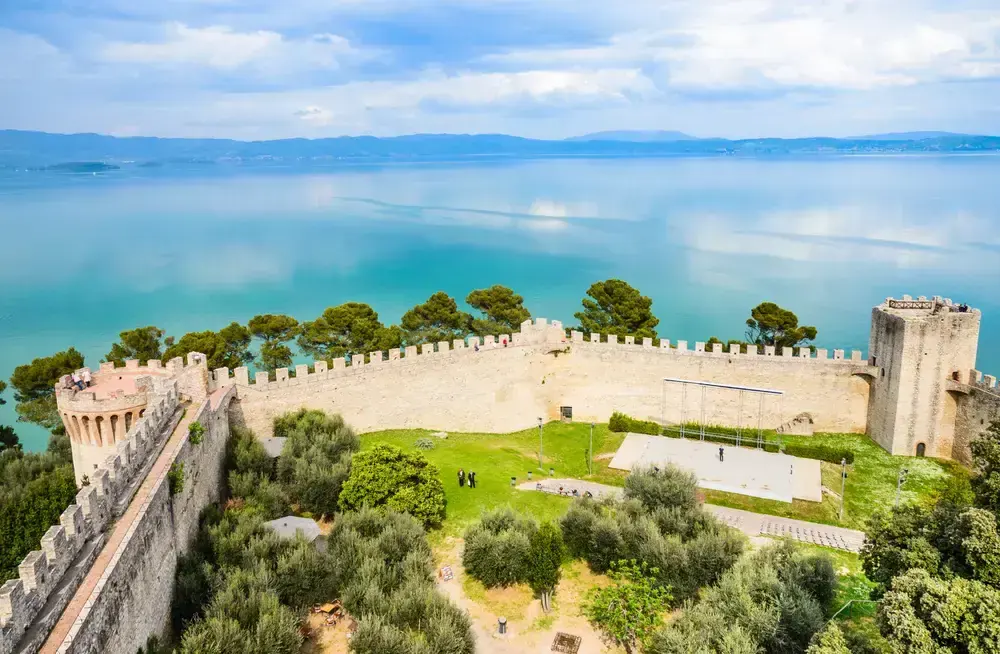
Lake Trasimeno, about half an hour from the villa.
Across the regional border lies Lake Trasimeno, Italy's fourth-largest lake by surface area.
Castiglione del Lago: a village on a promontory with the Rocca del Leone castle and a lakeside promenade.
Isola Maggiore and Isola Polvese: ferries leave from Passignano, Tuoro and San Feliciano; the first is a fishing village, the second a nature reserve.
Orvieto (30–40 minutes): the Gothic cathedral with its mosaic façade, St Patrick's Well, the underground city and Orvieto Classico wine.
Perugia (about 50 minutes) and Assisi (over an hour): full days of art and medieval history.
Siena and Florence: the great cities in a day
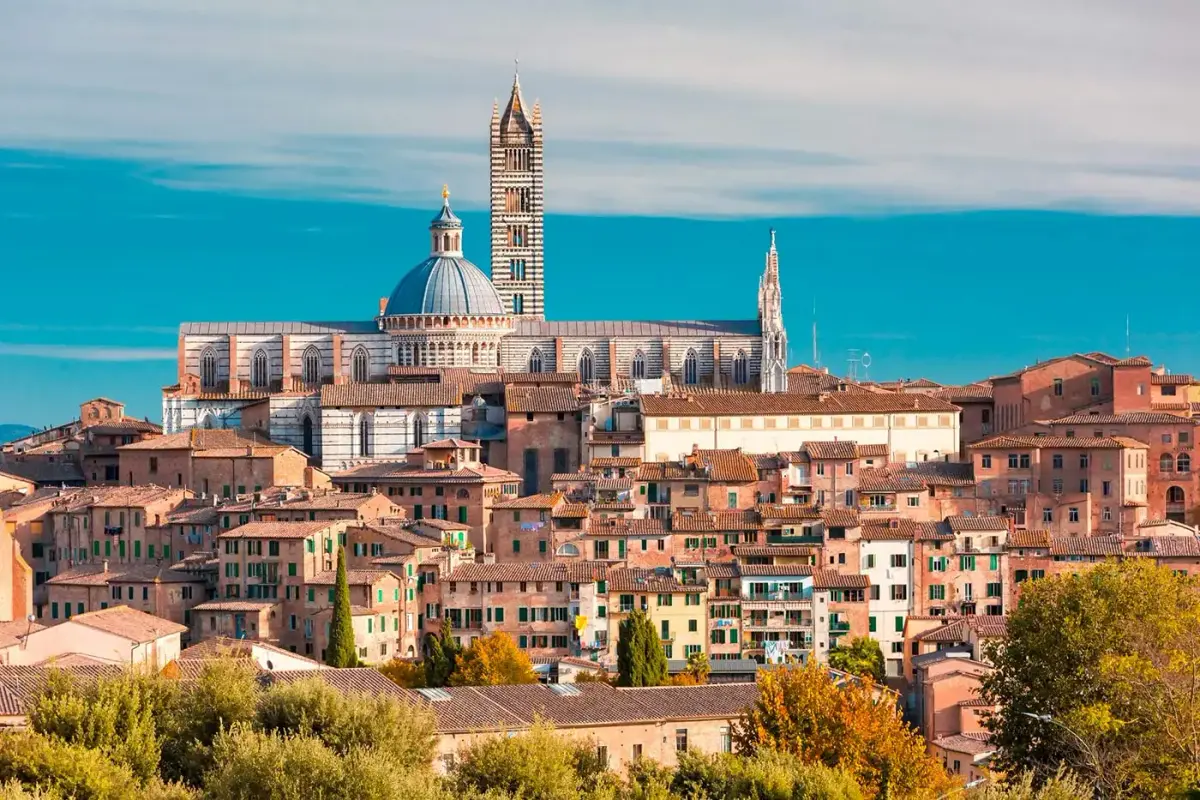
Siena and its Duomo.
Siena (45–60 minutes) is the easiest to reach: Piazza del Campo, the Duomo and the Opera Museum fit into one day. If you can, avoid the Palio days (2 July and 16 August), when the centre is closed and extremely crowded.
Florence (60–90 minutes by car) can also be reached by train from Chiusi-Chianciano Terme station, handy if you don't want to hunt for parking. Book the Uffizi and the Duomo dome ahead.
Suggested itineraries from Podere Sionne
One day in Montepulciano and Pienza
Morning in Montepulciano: Piazza Grande, the Town Hall tower, a cellar tasting. Lunch in the centre. Afternoon in Pienza: Palazzo Piccolomini, pecorino, a walk on the walls. Sunset from a Val d'Orcia viewpoint.
An Etruscan and thermal day
Morning in Chiusi: the museum, Porsenna's Labyrinth, an Etruscan tomb. A lunch of pici. Afternoon at the Chianciano spas or at San Casciano dei Bagni.
A day on the lake
Morning at Castiglione del Lago and a walk on the promenade. Ferry to Isola Maggiore. Lunch of lake fish. Return via Città della Pieve.
A day in Siena
Leave early: Duomo and Opera Museum, Piazza del Campo, lunch at a trattoria in the centre. Back in the late afternoon.
A 5-day example: 1) arrival and Chiusi; 2) Montepulciano and Pienza; 3) Val d'Orcia with Bagno Vignoni and Montalcino; 4) Trasimeno or Orvieto; 5) Siena. A free sixth day at the villa is always a good idea.
What to eat and drink in the area
Pici: thick, irregular hand-rolled pasta, served with aglione sauce, cacio e pepe or ragù.
Pecorino: from fresh to aged, often served with honey or jams.
Grilled meat: steak and sausages, stars of Tuscan cooking. The villa has a barbecue so you can do it slowly.
Extra-virgin olive oil: harvested in October and November, when many mills open for visits.
Truffle: in autumn, simple pasta lets it shine.
Wines: Vino Nobile di Montepulciano, Brunello di Montalcino, Orcia DOC and, in Umbria, Orvieto Classico.
To try Tuscan cooking first-hand, Podere Sionne arranges a cooking class and a truffle hunt on request: details are on the home page.
When to go: seasons and events
Spring (April–June): very green hills, mild weather. Cantine Aperte (open cellars) is usually held on the last weekend of May.
Summer (July–August): hot, long days. Swimming in Trasimeno is pleasant. In Montepulciano, the Bravìo delle Botti is run at the end of August.
Autumn (September–November): grape and olive harvests, warm colours and truffles. Many consider it the best time.
Winter (December–March): few crowds, open fires and hot springs. Some restaurants reduce their hours.
Event dates change each year: always check the official calendars.
Practical tips for planning your visits
Car: the right tool for the countryside. Historic centres have limited-traffic zones: park outside and walk in.
Opening hours: many restaurants serve lunch until about 2:30 pm; churches and museums may close in the middle of the day.
Booking: cellars, the Uffizi, Etruscan tombs and weekend dinners should be reserved.
Train: Chiusi-Chianciano Terme station is on the Florence–Rome line, handy for Florence, Rome and Orvieto.
Pace: two destinations a day are enough. Part of these hills' beauty is not being in a hurry.
Frequently asked questions
What is there to see near Chiusi in one day?
The classic pairing is Montepulciano and Pienza: two Renaissance towns 15–35 minutes from Chiusi, with Vino Nobile and pecorino tastings. Alternatively, an Etruscan day in Chiusi followed by the Chianciano hot springs.
How far is Montepulciano from Chiusi?
About 15–20 minutes by car. Pienza is 25–35 minutes away, Lake Trasimeno about 30, Orvieto 30–40.
Do I need a car to visit the area?
To move between the Val di Chiana, Val d'Orcia and Umbria, yes, it is strongly recommended. Only Chiusi, Florence, Rome and Orvieto are easily reached by train from Chiusi-Chianciano Terme station.
What is the best time to visit Chiusi and the Val d'Orcia?
April–June and September–October offer mild weather, spectacular landscapes and less heat. Autumn adds the grape harvest, new olive oil and truffles.
Which hot springs are closest to Chiusi?
Chianciano Terme (about 20 minutes), Sarteano and San Casciano dei Bagni (about 30 minutes). Farther away are Bagno Vignoni and Bagni San Filippo (about an hour) and Saturnia (about 1 hour 15).
How many days do I need to see the area?
For a first trip, 4–7 days: Chiusi, Montepulciano, Pienza and the Val d'Orcia, Trasimeno or Orvieto, and one great city such as Siena or Florence.
Where should I stay to visit both Tuscany and Umbria?
Chiusi is ideally placed right by the border. Podere Sionne, at Chiusi Città, sleeps up to 14 and has a 2-hectare private park: a convenient base for every destination in this guide.
Truffles in Tuscany: Season, Hunting and Tips — When is truffle season in Tuscany, how a guided hunt with dogs works, how to spot a good truffle and eat it near Chiusi and the Crete Senesi.
Val d'Orcia in One Day: Itinerary from Chiusi — A one-day Val d'Orcia itinerary from Chiusi: Pienza, Vitaleta chapel, San Quirico, Bagno Vignoni. Timings, stops, photo spots and practical tips.
Etruscan Chiusi: Museum, Porsenna's Labyrinth and Tombs — A guide to Etruscan Chiusi: the Archaeological Museum, Porsenna's Labyrinth, catacombs and the Tomb of the Monkey. What to see in half a day and how to plan visits.
 Podere Sionne